.png)


Subscribe to our newsletter
Subscribe to get exclusive insights, invites, and expert tips from the Localintel team.
Oops! Something went wrong while submitting the form.



Responding to information requests, investment attraction materials, council briefings, website updates, workforce reports. The list of what needs to be produced is long, the data needed to do it credibly is scattered, and the time to pull it together is usually not there.
For most teams, the answer has been a combination of manual work, outside consultants, and content that's never quite as current or complete as it should be.
A growing number of Ontario economic development teams are approaching this differently. Organizations including Norfolk County, Elgin County, City of Barrie, and City of Clarence-Rockland are using Localintel's content platform to produce the reports, profiles, stories, and website tools their teams need without the manual work that usually stands in the way.
Norfolk County's Economic Development team used to commission outside consultants for core community content. Through the platform, they now produce it themselves – on demand, in-house. Reports are publication-ready PDFs; profiles are interactive and shareable by link, with no platform access required for the recipient. Read the full Norfolk County case study here.
Several small municipalities in Ontario have built their investment attraction pages around Localintel's interactive data tools available in the platform – widgets that surface current, sourced information on logistics, workforce, demographics, quality of life, and economic profile for investors and site selectors. The data behind them updates automatically as new government figures release; the teams don't have to rebuild anything.
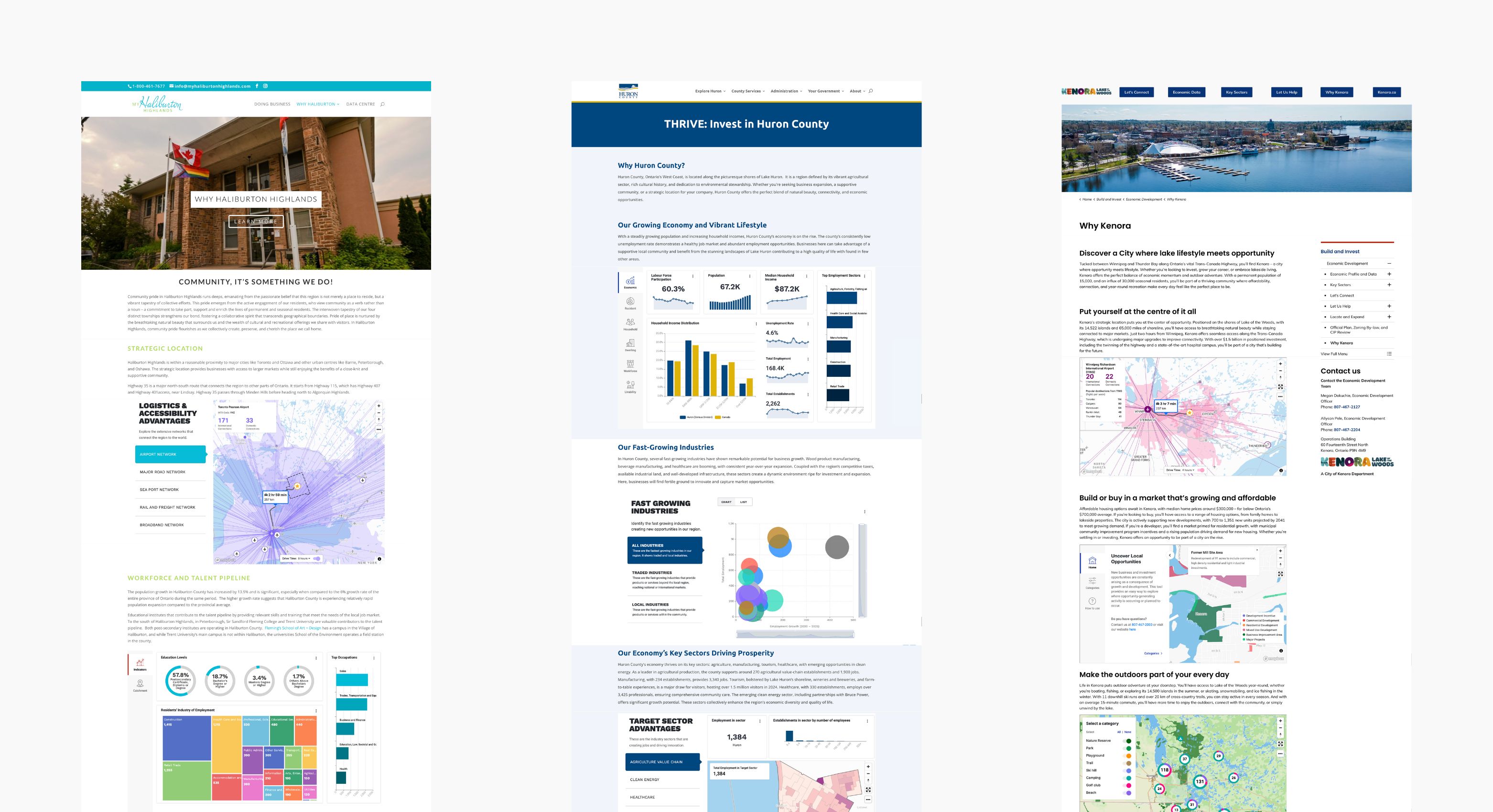
Huron County's Invest in Huron County page uses widgets covering logistics and market access, community profile, key sectors, fast-growing industries, workforce advantages, talent pipeline, and quality of life – giving site selectors a data-rich picture of the county for every major investment decision.
The Why Haliburton Highlands page uses widgets covering community demographics, strategic location and highway access, quality of life, and workforce profile – a comprehensive investment picture for a county whose population has grown nearly at more than double Ontario's provincial rate over the same period.
The City of Kenora's Why Kenora page embeds widgets covering strategic location, economic profile, workforce profile, available land and opportunities, and quality of life – giving businesses and investors exploring Northwestern Ontario a current, detailed picture of the city.
In each case, the team built their page. Localintel supplies the data and keeps it current.
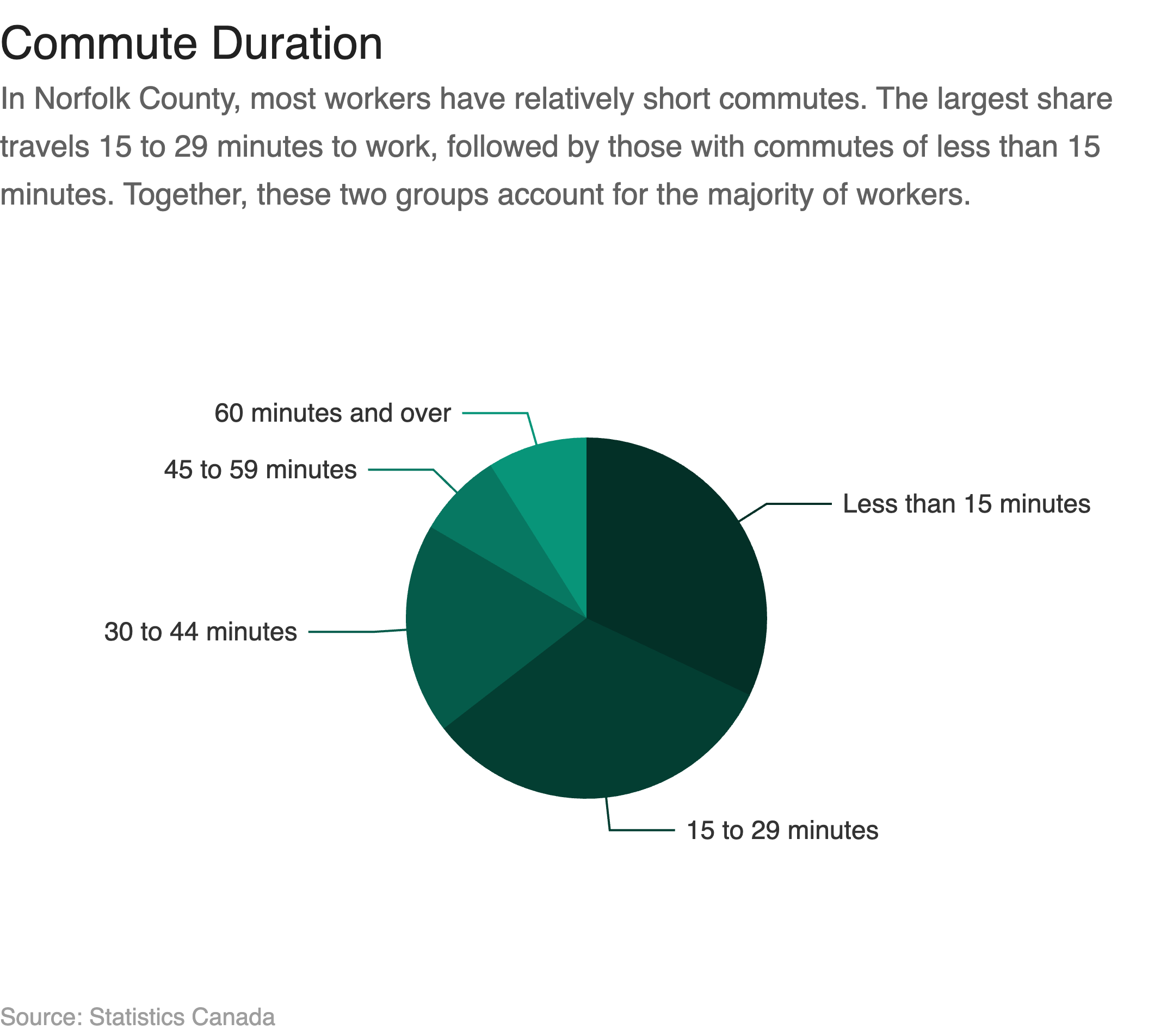
Municipalities have access to a growing library of platform-generated stories they can edit and publish directly to newsletters, websites, and council communications. As Norfolk County Business Development Coordinator Blaire Sylvester described it: "I haven't even posted too many stories or news articles on the website with data points because I just don't even have the time to collect them."
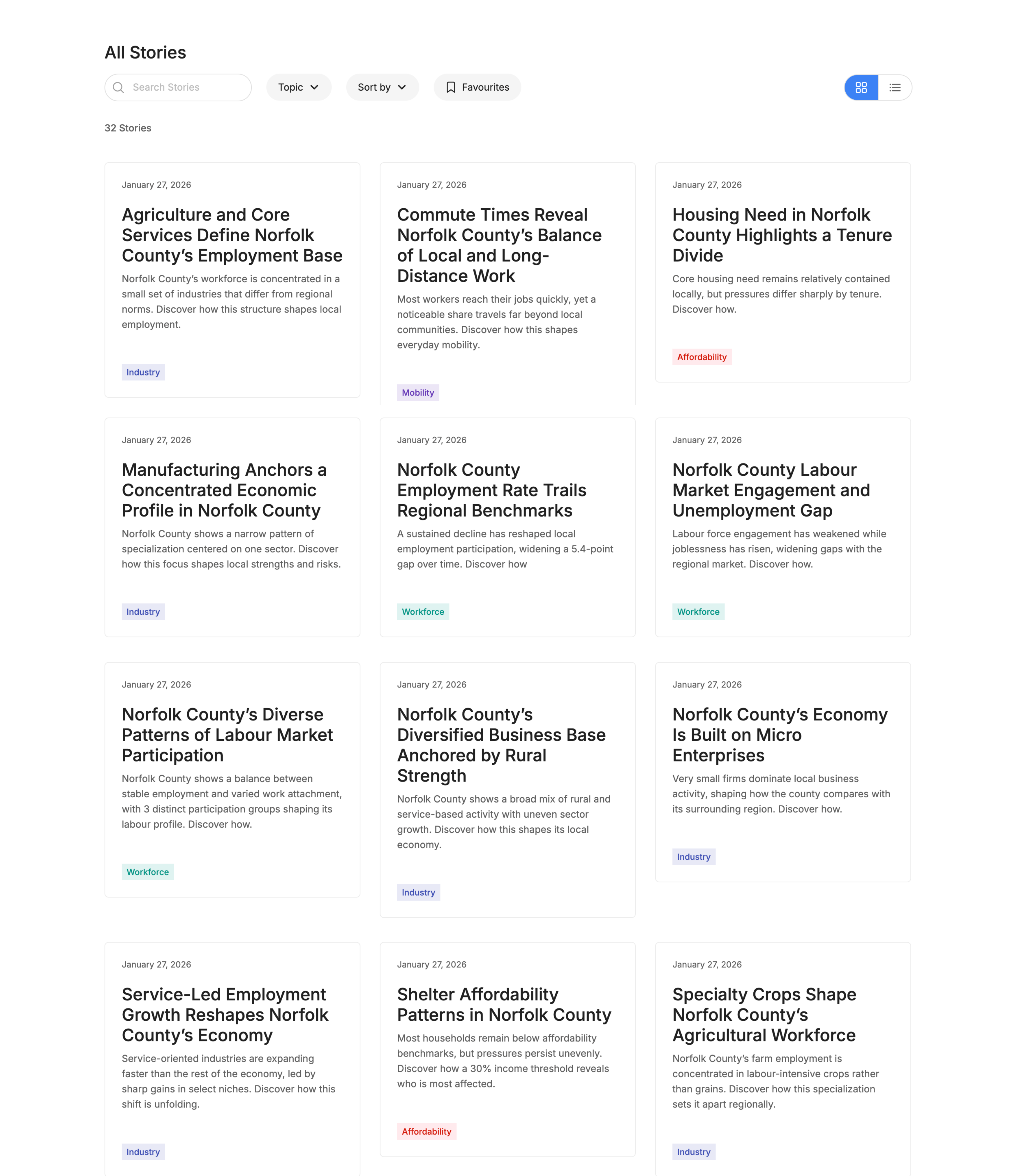
When council or an investor asks a question, the platform can often supply a credible, structured starting point immediately. Norfolk County's Director of Economic Development John Regan described the experience: "Essentially I copy and pasted, did very minor edits to it… and sent it off. And I couldn't do that before." He calls it "literally like having an economic development analyst on staff – a virtual one."
Three-quarters of economic developers in Localintel's annual survey have used AI tools to help create or refine content. Their biggest concerns: accuracy and the risk of errors (77%), and sourcing and credibility (65%).
Generic AI can help draft. Localintel helps economic developers publish.
The difference starts with the data. Generic AI pulls from wherever it can. Localintel is built on a governed data layer combining official government sources and curated third-party datasets – so teams know where the numbers came from and can stand behind what they share. That matters when the audience includes councils, investors, and site selectors who expect defensible information.
The workflow difference is just as significant. Generic AI starts with a blank prompt. Localintel gives teams a content library built around the specific tasks economic developers already do every week. They don't have to guess what to ask for. They start with content designed for the work they already do.
Statistics Canada begins releasing 2026 Canadian Census data in November 2026, with subsequent releases running through December 2027 covering population, age, income, families and households, labour, education, housing, and more. As each release comes through, the Localintel platform will automatically incorporate those updates across reports, profiles, stories, and website widgets. Teams won't need to rebuild anything. When council asks what the latest census says about the community, the answer will already be ready.
In a short demo, our team will show you the reports, profiles, stories, and website tools that are ready to use for your community today.

Welcome to a whole new way to communicate your location’s advantages.
